

Telehealth Integration with EMR: What Clinics Need
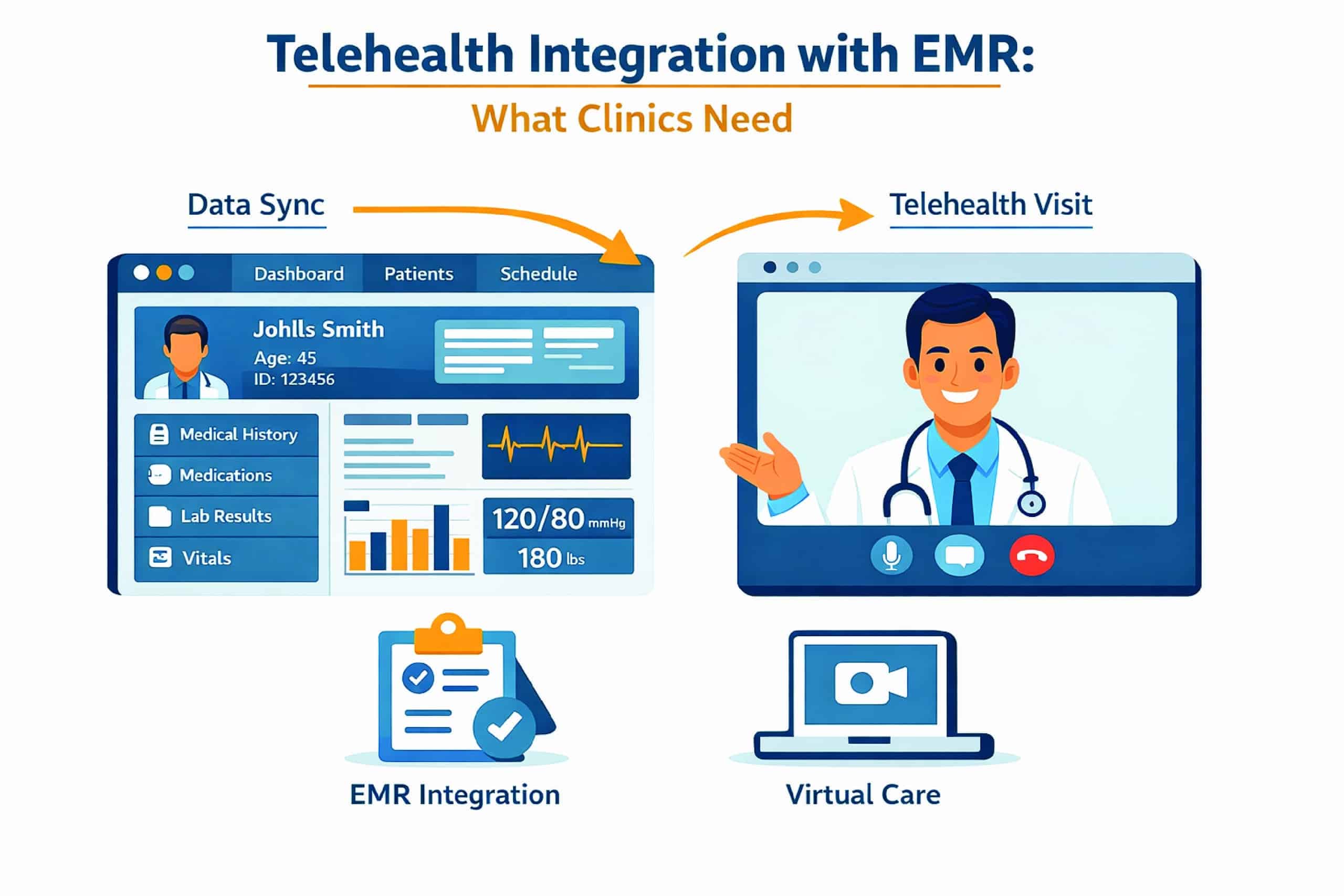
Telehealth Integration with EMR: What Clinics Need for Seamless Virtual Care
Telehealth is no longer a temporary solution—it has become a permanent part of modern healthcare delivery. Patients expect convenient virtual visits, providers appreciate the flexibility, and clinics benefit from expanded access and improved continuity of care.
However, many practices made the shift to telehealth quickly, often using standalone video platforms that operate separately from their Electronic Medical Record (EMR) systems. The result? Duplicate data entry, fragmented workflows, billing errors, compliance risks, and frustrated staff.
This raises an important question:
How can clinics deliver efficient, compliant, and profitable virtual care without creating operational complexity?
The answer lies in telehealth integration with EMR. When virtual visits are fully embedded within the clinical system, scheduling, documentation, billing, and patient communication all work together—creating a seamless workflow that improves efficiency, patient experience, and revenue.
In this guide, we’ll explore what clinics need to know about integrating telehealth with EMR and how to optimize virtual care for long-term success.
What Telehealth Integration with EMR Really Means
Telehealth-EMR integration allows providers to conduct virtual visits directly within their clinical workflow. Instead of switching between multiple systems, everything happens in one place—from scheduling and video conferencing to documentation and billing.
Integrated vs. Standalone Telehealth
Standalone Telehealth:
- Separate video platform
- Manual patient data entry
- Disconnected documentation
- Increased risk of billing errors
Integrated Telehealth:
- Patient information automatically populates from the EMR
- Visit notes are saved directly to the patient record
- Charges flow into the billing system
- A single, streamlined workflow
This integration eliminates redundancy, reduces errors, and significantly improves telehealth workflow efficiency.
Why Telehealth Integration Matters for Clinics
Disconnected systems create inefficiencies that impact both staff productivity and patient care.
Eliminates Duplicate Work
With integration, patient demographics, insurance information, and medical history automatically populate for each virtual visit. Providers document once, and the information flows throughout the system.
Improves Provider Efficiency
Clinicians can:
- Access patient records during the video visit
- Order labs, imaging, or medications instantly
- Complete documentation without leaving the platform
This reduces time spent navigating between tools and improves daily productivity.
Enhances Patient Experience
Patients benefit from:
- One-click access to virtual visits through the patient portal
- Fewer technical issues
- Faster communication and follow-up
Convenience and reliability improve satisfaction and retention.
Essential Features Clinics Need in an Integrated Telehealth System
Not all telehealth solutions deliver the same level of efficiency. Clinics should look for the following capabilities:
Seamless Scheduling
Patients and staff should be able to select virtual visits during the normal appointment booking process. Automated reminders with secure visit links reduce no-shows.
Built-In Video Functionality
The video platform should be embedded within the EMR or accessible through a secure browser—eliminating the need for third-party applications.
Real-Time Documentation Tools
Providers should have access to:
- Telehealth-specific templates
- Voice dictation
- Structured charting
This ensures complete and compliant documentation.
Patient Portal Integration
Patients can:
- Complete pre-visit forms and consent
- Join visits easily
- Access after-visit summaries
When these features work together, telehealth becomes a natural extension of the clinic’s workflow rather than a separate process.
Improving Clinical Workflow with Integrated Telehealth
Integration enhances every stage of the patient journey.
Pre-Visit Preparation
Before the appointment, the system can:
- Verify insurance eligibility
- Collect consent for telehealth
- Gather medical history updates
This reduces administrative work and ensures providers are prepared.
During the Visit
Providers can:
- View patient history, medications, and lab results
- Document in real time
- Order tests, referrals, or prescriptions instantly
Having full clinical visibility improves decision-making and efficiency.
Post-Visit Follow-Up
After the encounter, the system can:
- Send care plans and instructions via the portal
- Schedule follow-up visits
- Route documentation directly to billing
This streamlined workflow saves time and improves continuity of care.
Telehealth Documentation, Coding, and Billing Requirements
Virtual visits must meet specific documentation and billing standards to ensure proper reimbursement.
Documentation Essentials
Records should include:
- Type of visit (audio-video or audio-only)
- Patient consent for telehealth
- Duration or level of medical decision-making
- Provider location and patient location (when required)
Coding Considerations
Telehealth services often require:
- Appropriate CPT codes
- Modifiers (such as 95 or GT, depending on payer)
- Correct place of service designation
Integrated Billing Advantages
When telehealth is embedded within the EMR:
- Charges are captured automatically
- Coding support reduces errors
- Claims are submitted faster
- Denial risk decreases
Clinics that combine integrated telehealth with optimized revenue cycle workflows often see the best financial results. Comprehensive solutions from 1st Providers Choice help ensure that virtual visit documentation, coding, and billing are aligned for maximum reimbursement and compliance.
Enhancing Patient Engagement Through Integrated Telehealth
Telehealth integration also strengthens patient relationships.
Easy Access Through the Patient Portal
Patients can join visits with a single click, eliminating the need to download software or manage multiple links.
Reduced No-Shows
Automated reminders and simple access improve attendance rates and keep schedules full.
Better Access to Care
Telehealth makes it easier to:
- Conduct chronic care follow-ups
- Provide post-procedure check-ins
- Serve patients with transportation or mobility challenges
Improved accessibility leads to higher satisfaction and long-term loyalty.
Compliance, Security, and Risk Management
Security and privacy are critical for virtual care.
HIPAA-Compliant Communication
Integrated telehealth platforms use encrypted video and messaging, ensuring patient information remains protected.
Secure Data Storage
All documentation and communication are stored within the EMR, reducing the risk associated with external tools.
Audit Trails
Integrated systems maintain detailed records of visits, communications, and access—supporting compliance and reducing legal risk.
Using standalone consumer video platforms increases exposure, while integrated solutions provide enterprise-level security.
Real-World Benefits of Telehealth-EMR Integration
Clinics that fully integrate telehealth often experience measurable improvements:
- Reduced administrative workload
- Faster documentation and billing
- Increased provider productivity
- Expanded patient access
- Additional revenue without expanding physical space
For example, a practice that adds virtual follow-ups for chronic care or post-treatment visits can increase patient volume while reducing in-office congestion.
Common Telehealth Integration Challenges (And How to Avoid Them)
Using Multiple Disconnected Systems
Switching between tools slows workflows and increases errors. Choose a fully integrated platform.
Inadequate Staff Training
Proper training ensures providers and staff use telehealth efficiently and confidently.
Patient Technology Barriers
Provide simple instructions and choose platforms that work on any device without downloads.
Lack of Workflow Planning
Standardizing telehealth processes helps ensure consistency and efficiency.
Organizations that partner with experienced healthcare technology providers—such as 1st Providers Choice—can streamline implementation and ensure telehealth supports both clinical and financial performance.
Key Metrics to Measure Telehealth Success
To evaluate effectiveness, clinics should monitor:
- Telehealth visit volume
- No-show rate for virtual visits
- Revenue per telehealth encounter
- Patient satisfaction scores
- Documentation completion time
- Claim approval and denial rates
Improvement in these metrics indicates successful telehealth integration and strong operational performance.
Is Telehealth Integration Worth It for Small and Mid-Sized Practices?
For many smaller practices, telehealth offers a cost-effective way to expand services without increasing overhead.
Benefits include:
- Additional appointment capacity without more exam rooms
- Improved access for rural or busy patients
- Greater provider flexibility
- Competitive differentiation
Cloud-based, integrated solutions make telehealth accessible and scalable for practices of all sizes.
Conclusion: Integrated Telehealth Is the Future of Efficient Care
Telehealth has evolved from a temporary necessity into a core component of modern healthcare. But its success depends on how well it fits into your clinical and financial workflows.
When telehealth is fully integrated with EMR, practices benefit from:
- Streamlined scheduling and documentation
- Improved patient access and satisfaction
- Accurate coding and faster reimbursement
- Increased provider productivity
- New revenue opportunities without expanding physical space
The most successful clinics treat telehealth as a strategic operational tool—not just a video solution.
If your current virtual care process involves multiple platforms, manual work, or billing challenges, it may be time to evaluate a more integrated approach. End-to-end clinical and revenue solutions from 1st Providers Choice help healthcare organizations implement secure, efficient telehealth workflows that support both patient care and financial growth.
The real question isn’t whether your practice offers telehealth—it’s whether your telehealth system is truly working for your workflow, your patients, and your bottom line.
Frequently Asked Questions (FAQs)
What is telehealth integration with EMR?
Telehealth integration with EMR allows virtual visits to be conducted directly within the electronic medical record system. This means scheduling, video consultations, documentation, coding, and billing are all managed in one platform, eliminating duplicate data entry and improving workflow efficiency.
How does EMR integration improve telehealth workflow?
EMR integration streamlines the entire virtual care process by automatically pulling patient information into the visit, enabling real-time documentation, supporting electronic orders and prescriptions, and sending charges directly to the billing system. This reduces administrative work, saves provider time, and minimizes errors.
What documentation is required for telehealth visits?
Telehealth documentation should include the type of visit (audio-video or audio-only), patient consent for virtual care, the duration or level of medical decision-making, and clinical notes supporting the service provided. Proper documentation ensures compliance and accurate reimbursement.
Does telehealth integration help reduce claim denials?
Yes. When telehealth is integrated with the EMR, coding assistance, automated charge capture, and built-in compliance checks help ensure correct CPT codes, modifiers, and place-of-service details. This reduces billing errors and improves claim approval rates.
Is telehealth integration beneficial for small or independent practices?
Absolutely. Integrated telehealth allows small and mid-sized practices to expand patient access, increase appointment capacity without additional space, reduce no-shows, and improve revenue. Cloud-based solutions make implementation affordable, scalable, and easy to manage.