

Patient Portal Benefits for Medical Practices
Patient Portal Benefits for Medical Practices: Improving Efficiency, Engagement, and Revenue
Healthcare has entered a digital-first era. Patients now expect the same level of convenience from their healthcare providers as they receive from banks, airlines, and online retailers. They want to schedule appointments online, access their medical records instantly, communicate with providers without long hold times, and pay bills easily.
For medical practices, however, meeting these expectations can be challenging. Front desks are overwhelmed with phone calls, staff spend hours handling administrative requests, missed appointments disrupt schedules, and delayed patient payments impact cash flow.
This raises an important question:
How can medical practices improve patient experience while reducing administrative workload and increasing operational efficiency?
The answer lies in implementing a patient portal. When integrated with your EMR system, a patient portal becomes a powerful tool that streamlines communication, enhances patient engagement, reduces administrative burden, and improves financial performance.
In this guide, we’ll explore the key patient portal benefits for medical practices and why this technology has become essential for modern healthcare operations.
What Is a Patient Portal and How Does It Work?
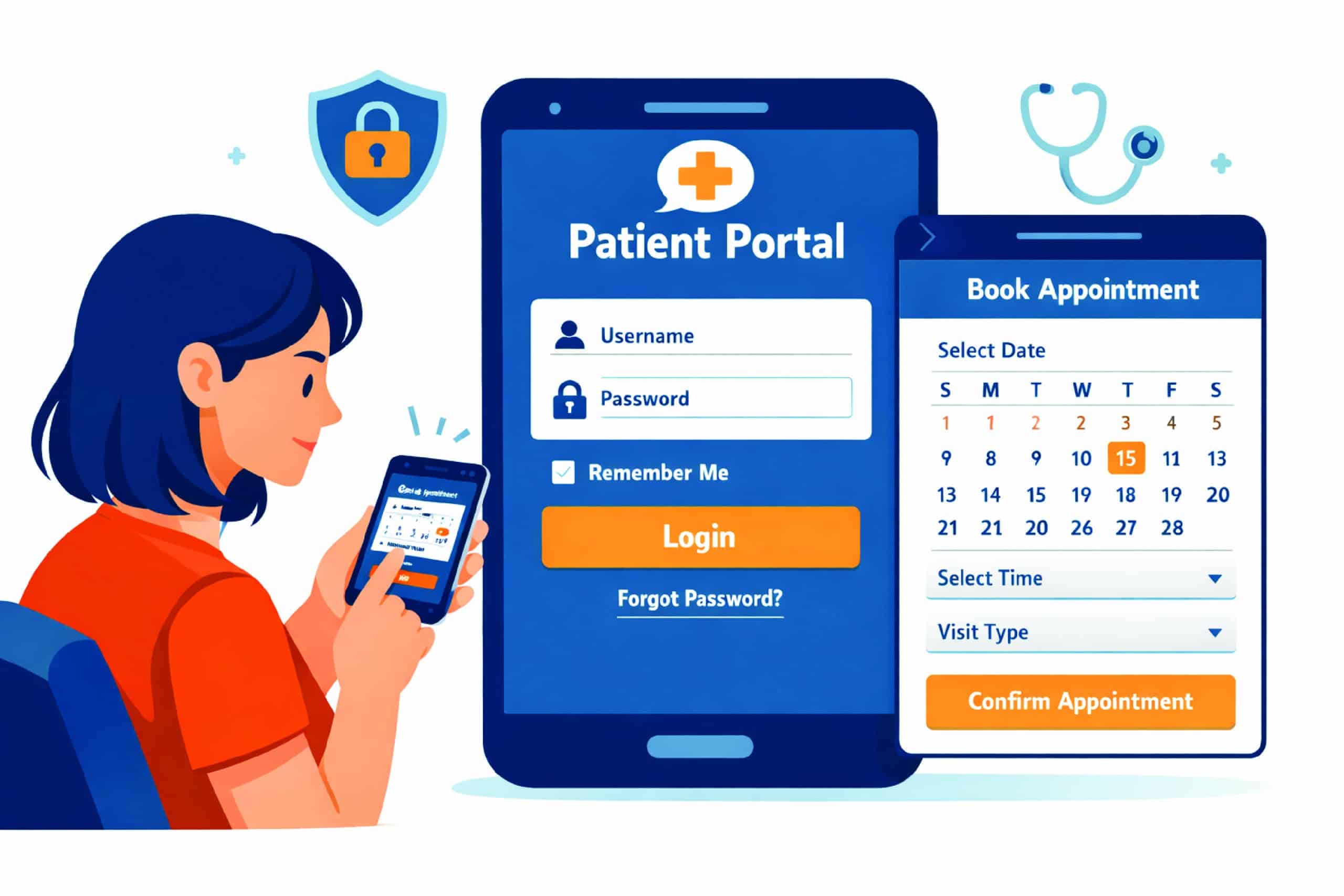
A patient portal is a secure online platform that allows patients to access their health information and interact with their healthcare provider anytime, from any device.
Most modern patient portals include features such as:
- Online appointment scheduling
- Secure messaging with providers
- Access to medical records and visit summaries
- Lab and test results
- Prescription refill requests
- Online bill payment
When integrated with an Electronic Medical Record (EMR) system, the portal updates in real time. This eliminates the need for manual data entry and ensures that patients and staff always have access to accurate, up-to-date information.
By giving patients self-service access, practices can significantly improve workflow efficiency while enhancing the overall care experience.
Reducing Administrative Workload and Staff Burden
One of the most immediate benefits of a patient portal is the reduction in front-office workload.
Fewer Phone Calls
Without a portal, patients must call the office to:
- Schedule or reschedule appointments
- Request prescription refills
- Ask for test results
- Update personal information
With a portal, these tasks can be completed online. This reduces call volume and allows staff to focus on higher-value responsibilities.
Digital Forms and Paperless Intake
Patient portals enable individuals to complete registration forms, update insurance details, and provide medical history before their visit. This improves data accuracy and shortens the check-in process.
Automated Reminders and Notifications
Automated appointment reminders via email or text help reduce no-shows and keep schedules running smoothly. Practices can also send preventive care reminders and follow-up instructions without manual outreach.
Together, these features significantly improve patient portal workflow efficiency and reduce administrative stress.
Improving Patient Engagement and Satisfaction
Engaged patients are more likely to follow treatment plans, attend appointments, and maintain long-term relationships with their providers.
24/7 Access to Health Information
Patient portals allow individuals to view:
- Lab results
- Visit summaries
- Medication lists
- Care instructions
This transparency helps patients better understand their health and reduces anxiety while waiting for information.
Convenient and Secure Communication
Secure messaging enables patients to ask non-urgent questions without scheduling an appointment or waiting on hold. Providers can respond efficiently, improving communication while maintaining documentation within the medical record.
Empowering Patients in Their Care
When patients have easy access to their health data and communication tools, they become more involved in managing their care—leading to better outcomes and higher satisfaction.
Reducing No-Shows and Improving Appointment Management
Missed appointments are one of the most common sources of lost revenue in medical practices.
Online Scheduling Convenience
Patients can book appointments at any time, even outside office hours. This increases scheduling flexibility and improves access to care.
Automated Reminders
Email and text reminders significantly reduce forgotten appointments, helping clinics maintain full schedules.
Easy Rescheduling and Cancellations
Instead of simply missing an appointment, patients can quickly reschedule online. This gives practices the opportunity to fill open slots and maintain productivity.
Accelerating Revenue and Improving Collections
Beyond operational efficiency, patient portals also deliver measurable financial benefits.
Online Bill Pay
Patients are more likely to pay quickly when they can view statements and make payments online. Many portals also support payment plans and stored payment methods.
Cost Transparency
Access to billing information reduces confusion and minimizes calls related to account balances or insurance coverage.
Integration with Revenue Cycle Management
When patient portals work seamlessly with billing systems, practices experience:
- Faster patient collections
- Reduced billing inquiries
- Lower administrative costs
Practices that combine patient engagement tools with optimized revenue workflows often see the strongest results. Integrated clinical and financial solutions offered by 1st Providers Choice help medical organizations streamline operations, improve patient communication, and enhance overall revenue performance.
Enhancing Clinical Workflow Efficiency
Patient portals don’t just benefit administrative and financial operations—they also improve clinical efficiency.
Pre-Visit Data Collection
Patients can update medical history, medications, allergies, and insurance information before arriving. Providers enter the visit with accurate, up-to-date information.
Faster Check-In
Digital intake reduces waiting room congestion and keeps appointments running on schedule.
Better Care Coordination
Providers can share care plans, follow-up instructions, and educational materials through the portal, improving continuity of care.
Supporting Compliance and Security
Patient portals provide a secure alternative to traditional communication methods.
HIPAA-Compliant Messaging
Unlike email or phone conversations, portal communications are encrypted and stored within the patient’s record.
Secure Access Controls
Multi-factor authentication and user permissions protect sensitive health information.
Audit Trails
All interactions are documented, helping practices maintain compliance and reduce legal risk.
Real-World Results: Measurable Benefits of Patient Portals
Practices that fully adopt patient portals often see significant improvements, including:
- 20–30% reduction in administrative phone calls
- Lower no-show rates
- Faster patient payments
- Improved patient satisfaction scores
- Increased patient retention
For example, a mid-sized clinic that encourages portal enrollment may reduce front-desk workload enough to avoid hiring additional staff while simultaneously improving cash flow.
Common Patient Portal Challenges (And How to Overcome Them)
Despite the benefits, some practices struggle with adoption.
Low Patient Enrollment
Solution:
- Introduce the portal during check-in
- Provide simple instructions
- Highlight benefits such as faster communication and online payments
Staff Resistance
Proper training helps staff understand how the portal reduces their workload rather than adding complexity.
Poor System Integration
Choosing a portal that integrates seamlessly with EMR and billing systems is critical. Solutions like those provided by 1st Providers Choice are designed to support unified clinical, operational, and financial workflows.
Key Metrics to Measure Patient Portal Success
To evaluate effectiveness, practices should track:
- Patient enrollment rate
- Reduction in phone call volume
- No-show rate
- Percentage of payments made online
- Patient satisfaction scores
Improvement in these metrics indicates a strong patient portal ROI for medical practices.
Is a Patient Portal Worth It for Small and Mid-Sized Practices?
Many smaller practices worry about cost or complexity, but modern cloud-based solutions make patient portals affordable and easy to implement.
For small and mid-sized practices, portals help:
- Reduce administrative staffing needs
- Improve patient retention
- Increase operational efficiency
- Compete with larger healthcare organizations
In today’s healthcare environment, not offering digital access can actually lead to lost patients and missed revenue opportunities.
Conclusion: Patient Portals Are Essential for Modern Medical Practices
Patient expectations have changed—and medical practices must adapt to stay competitive. A well-implemented patient portal delivers benefits across every area of the organization, including:
- Reduced administrative workload
- Improved patient engagement and satisfaction
- Lower no-show rates
- Faster collections and stronger cash flow
- Streamlined clinical and operational workflows
The most successful practices view patient portals not just as a convenience feature, but as a strategic tool for efficiency, growth, and long-term patient loyalty.
If your practice is still relying heavily on phone calls, paper forms, and manual communication, it may be time to modernize your approach. Comprehensive healthcare technology and revenue optimization solutions from 1st Providers Choice help medical organizations implement patient-centered tools that improve efficiency, strengthen financial performance, and support sustainable growth.
The question is no longer whether patients want digital access—it’s whether your practice is ready to provide the convenience and efficiency they expect.
Frequently Asked Questions (FAQs)
What are the main benefits of a patient portal for medical practices?
Patient portals improve operational efficiency by reducing phone calls, automating appointment scheduling and reminders, enabling online bill payments, and allowing patients to access their medical records. They also enhance patient engagement, improve satisfaction, and help practices increase collections while lowering administrative workload.
How do patient portals reduce administrative workload?
Patient portals allow patients to complete tasks such as scheduling appointments, requesting prescription refills, updating personal information, and paying bills online. This significantly reduces front-desk phone volume, manual data entry, and repetitive administrative tasks, allowing staff to focus on higher-priority responsibilities.
Can patient portals help reduce missed appointments?
Yes. Patient portals send automated email and text reminders, allow easy rescheduling, and provide convenient online booking. These features help reduce no-show rates and keep provider schedules optimized, improving both workflow efficiency and revenue.
How do patient portals improve patient collections?
Patient portals provide real-time access to billing statements and offer secure online payment options. Patients are more likely to pay promptly when they can view balances, set up payment plans, and make payments conveniently, leading to faster collections and improved cash flow.
Are patient portals secure and HIPAA-compliant?
Yes. Modern patient portals use encryption, secure login authentication, and access controls to protect sensitive health information. All communications and transactions are stored within the system, providing audit trails and ensuring compliance with HIPAA privacy and security requirements.