

How EMR Improves Clinic Workflow Efficiency
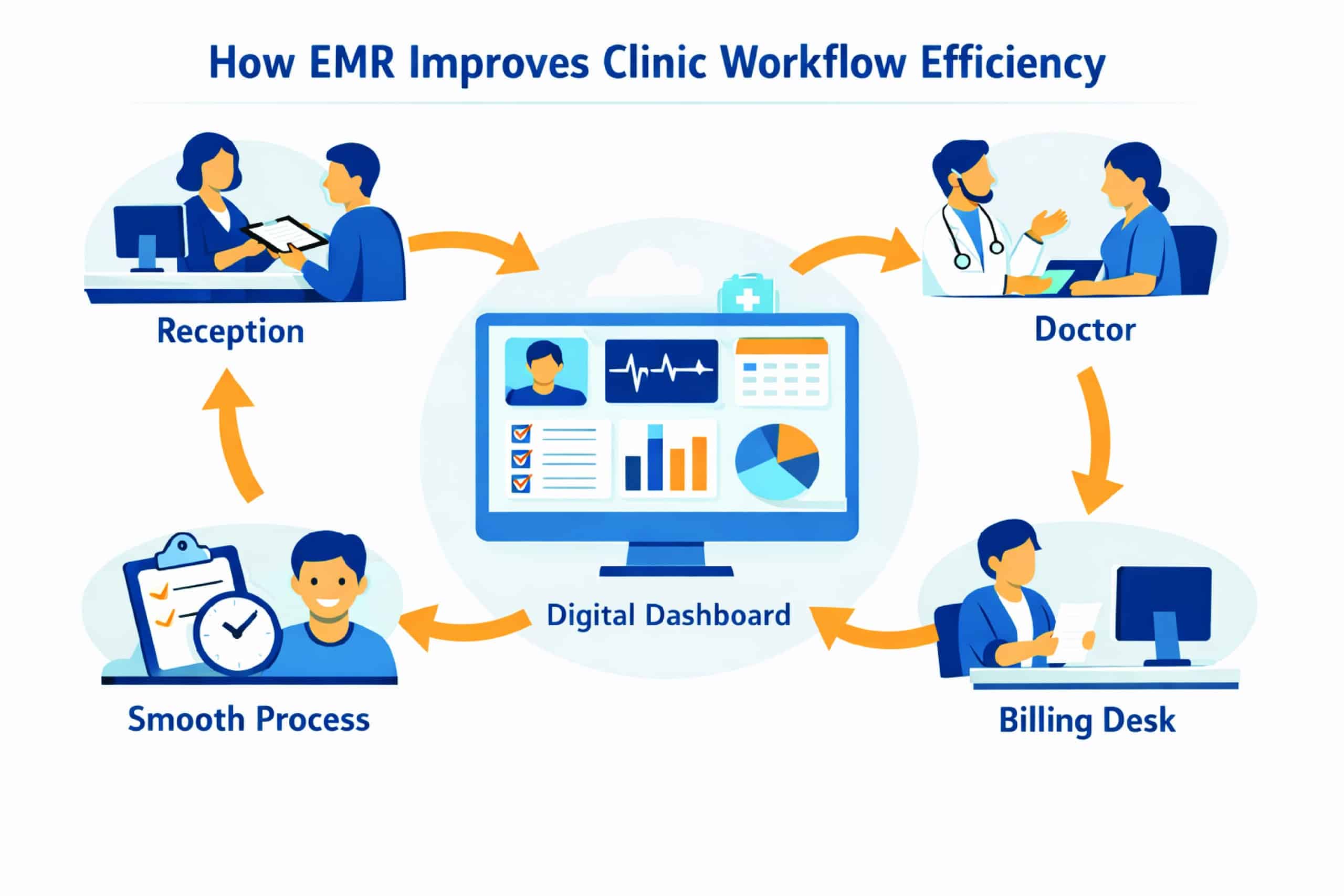
How EMR Improves Clinic Workflow Efficiency: A Complete Guide for Modern Practices
Running a healthcare clinic today is more complex than ever. Providers and staff must manage patient care, documentation, insurance verification, billing, compliance, and communication—often within tight schedules and limited resources. When workflows are inefficient, the impact is immediate: longer wait times, staff burnout, delayed reimbursements, and dissatisfied patients.
Many clinics still struggle with manual processes, disconnected systems, or underutilized technology. The real question is:
How can clinics improve efficiency without increasing staff or operational costs?
The answer lies in optimizing Electronic Medical Records (EMR). A well-implemented EMR system does more than store patient data—it streamlines operations, automates routine tasks, improves coordination, and enhances productivity across the entire clinic.
In this guide, we’ll explore how EMR improves clinic workflow efficiency and why it has become an essential tool for modern healthcare practices.
What Workflow Efficiency Means in a Clinical Environment
Clinic workflow efficiency refers to how smoothly patients, information, and tasks move through the care process—from appointment scheduling to final billing.
An efficient workflow includes:
- Quick and accurate patient registration
- Timely clinical documentation
- Seamless ordering of labs, imaging, and prescriptions
- Accurate coding and billing
- Effective follow-up and communication
Without a properly optimized EMR, clinics often face:
- Duplicate data entry
- Missing or incomplete patient information
- Long patient wait times
- Administrative overload
- Delayed claims and revenue loss
By digitizing and automating key processes, EMR systems eliminate bottlenecks and create a more organized, predictable workflow.
Streamlining Front-Desk Operations with EMR
The front desk sets the tone for the patient experience—and inefficiencies here ripple throughout the clinic.
Digital Patient Registration and Intake
Modern EMR systems allow patients to complete forms online before their visit. This reduces paperwork, minimizes manual data entry, and speeds up check-in.
Benefits include:
- Shorter wait times
- Fewer data entry errors
- Better patient satisfaction
Automated Scheduling and Appointment Management
EMR platforms provide real-time scheduling visibility and automated appointment reminders via text, email, or phone.
This helps:
- Reduce no-show rates
- Optimize provider schedules
- Improve daily patient flow
Real-Time Insurance Verification
Eligibility checks performed before the visit prevent surprises at checkout and reduce billing issues later.
Together, these features significantly improve EMR workflow efficiency at the administrative level.
Faster and More Accurate Clinical Documentation
Documentation is one of the most time-consuming aspects of patient care. EMR systems simplify and accelerate this process.
Smart Templates and Structured Charting
Specialty-specific templates, auto-fill fields, dropdown menus, and voice dictation help providers document encounters quickly and consistently.
This results in:
- Reduced documentation time
- Improved accuracy and completeness
- Less after-hours charting (“pajama time”)
Instant Access to Patient Records
Providers can view complete medical histories, lab results, medications, and prior notes in seconds. This improves clinical decision-making and reduces the need to search for information across multiple systems.
When documentation becomes faster and more reliable, providers can focus more on patient care rather than administrative tasks.
Improving Care Coordination and Clinical Workflow
Efficient care delivery depends on seamless coordination between providers, staff, labs, and pharmacies.
Electronic Orders and Results Management
EMR systems allow providers to order labs, imaging, and tests electronically. Results are automatically routed back into the patient’s record.
This eliminates:
- Paper orders
- Lost results
- Delayed follow-ups
E-Prescribing
Electronic prescribing improves accuracy, reduces medication errors, and speeds communication with pharmacies.
Internal Task Management and Messaging
Many EMR platforms include built-in communication tools that allow providers and staff to assign tasks, share updates, and track workflow progress.
These features ensure nothing falls through the cracks and help teams work more efficiently.
Enhancing Billing Workflow and Revenue Efficiency
Workflow efficiency doesn’t stop at clinical care—it directly impacts financial performance.
Automated Charge Capture
Charges can be generated directly from clinical documentation, reducing missed services and speeding up the billing process.
Coding Support and Error Prevention
Built-in coding assistance and compliance checks help ensure accurate CPT and ICD-10 selection, reducing claim denials.
Seamless Revenue Cycle Integration
When EMR and billing systems work together, manual data entry is minimized and claims move through the system faster.
Practices that combine clinical workflow optimization with professional revenue cycle support often see the strongest results. Integrated solutions offered by 1st Providers Choice help align documentation, coding, and billing processes, improving both operational efficiency and cash flow.
Reducing Administrative Burden and Staff Burnout
One of the most significant benefits of EMR is the reduction of repetitive administrative work.
Automation of Routine Tasks
EMR systems automate:
- Appointment reminders
- Follow-up notifications
- Preventive care alerts
- Patient communication
This allows staff to focus on higher-value activities instead of manual coordination.
Patient Portals for Self-Service
Patient portals enable individuals to:
- Access medical records
- Request appointments
- Pay bills online
- Send secure messages
This reduces call volume and improves patient engagement.
Better Workload Management
Task tracking and workflow visibility help managers distribute work more effectively, improving team productivity and reducing burnout.
Improving Patient Flow and Overall Experience
Workflow efficiency directly affects how patients perceive your practice.
Reduced Wait Times
Faster check-in, real-time documentation, and organized scheduling keep visits running on time.
More Efficient Visits
Providers enter the exam room fully prepared, with access to patient history and relevant data.
Higher Satisfaction and Retention
Convenience, shorter visits, and better communication lead to stronger patient loyalty and positive reviews—key drivers of long-term growth.
Real-World Efficiency Gains from EMR
Clinics that fully optimize their EMR workflows often experience measurable improvements, such as:
- 20–30% reduction in documentation time
- Lower no-show rates through automated reminders
- Faster turnaround for prescriptions and lab results
- Increased patient volume without adding staff
For example, a mid-sized practice that improves scheduling and documentation efficiency may add several additional appointments per provider each day—resulting in significant annual revenue growth.
Common EMR Workflow Mistakes (And How to Avoid Them)
Technology alone doesn’t guarantee efficiency. Common pitfalls include:
Poor Implementation Planning
Without workflow analysis, the system may not align with real-world processes.
Inadequate Staff Training
Undertrained users create errors and inefficiencies.
Lack of Customization
Generic templates may slow documentation instead of improving it.
Disconnected Billing Processes
When clinical and financial workflows aren’t aligned, delays and errors increase.
Working with experienced partners and choosing customizable solutions—such as those available through 1st Providers Choice—helps ensure the EMR supports your clinic’s unique needs and maximizes efficiency.
Key Metrics to Measure EMR Workflow Efficiency
To evaluate performance, clinics should track:
- Average patient wait time
- Patients seen per provider per day
- Documentation time per encounter
- No-show rate
- Claim turnaround time
- Staff productivity levels
Consistent improvement in these metrics indicates that your EMR is delivering operational value.
Is EMR Workflow Optimization Worth It for Small Clinics?
Many small and mid-sized practices worry about cost and complexity. However, modern cloud-based EMR systems are designed to be scalable and affordable.
For smaller practices, EMR offers:
- Lower infrastructure costs
- Improved compliance and reporting
- Greater operational control
- The ability to compete with larger organizations
In today’s healthcare environment, inefficient workflows cost more in lost time, revenue, and patient satisfaction than the investment required to optimize EMR.
Conclusion: Efficiency Is the Foundation of a Successful Clinic
Workflow inefficiencies don’t just slow your clinic down—they affect revenue, staff morale, and patient experience. A well-optimized EMR system transforms daily operations by:
- Automating administrative tasks
- Accelerating documentation and billing
- Improving care coordination
- Reducing staff workload
- Enhancing patient flow and satisfaction
The practices that see the greatest success treat EMR as more than a record-keeping system—they use it as a strategic tool for operational excellence.
If your current processes still involve bottlenecks, delays, or excessive manual work, it may be time to evaluate whether your technology and workflows are truly aligned. Comprehensive clinical and revenue optimization solutions from 1st Providers Choice help healthcare organizations streamline operations, improve efficiency, and support sustainable growth.
The key question isn’t whether your clinic has an EMR—it’s whether your EMR is actually making your workflow faster, smarter, and more efficient.
Frequently Asked Questions (FAQs)
How does EMR improve clinic workflow efficiency?
EMR improves workflow efficiency by automating routine tasks such as patient registration, appointment scheduling, documentation, billing, and follow-ups. It reduces manual data entry, minimizes errors, improves information access, and allows providers and staff to complete tasks faster, resulting in smoother daily operations.
Can EMR reduce patient wait times?
Yes. EMR systems streamline check-in, enable pre-visit digital forms, and provide real-time access to patient records. Faster documentation and better scheduling help clinics stay on time, reducing overall patient wait times and improving the visit experience.
How does EMR help reduce staff workload and burnout?
EMR reduces administrative burden by automating appointment reminders, insurance verification, documentation templates, and patient communication through portals. This allows staff to focus on patient care and high-value tasks instead of repetitive manual work, improving productivity and reducing burnout.
What workflow metrics should clinics track after implementing an EMR?
Key performance indicators include:
Average patient wait time
Patients seen per provider per day
Documentation time per encounter
No-show rate
Claim processing turnaround time
Staff productivity levels
Monitoring these metrics helps measure the impact of EMR workflow improvements.
Is EMR workflow optimization beneficial for small or independent clinics?
Yes. Cloud-based EMR systems are cost-effective and scalable for small and mid-sized practices. They improve operational efficiency, reduce administrative costs, enhance patient experience, and help smaller clinics operate more competitively without increasing staff or overhead.