

Best EMR for Chiropractic Clinics
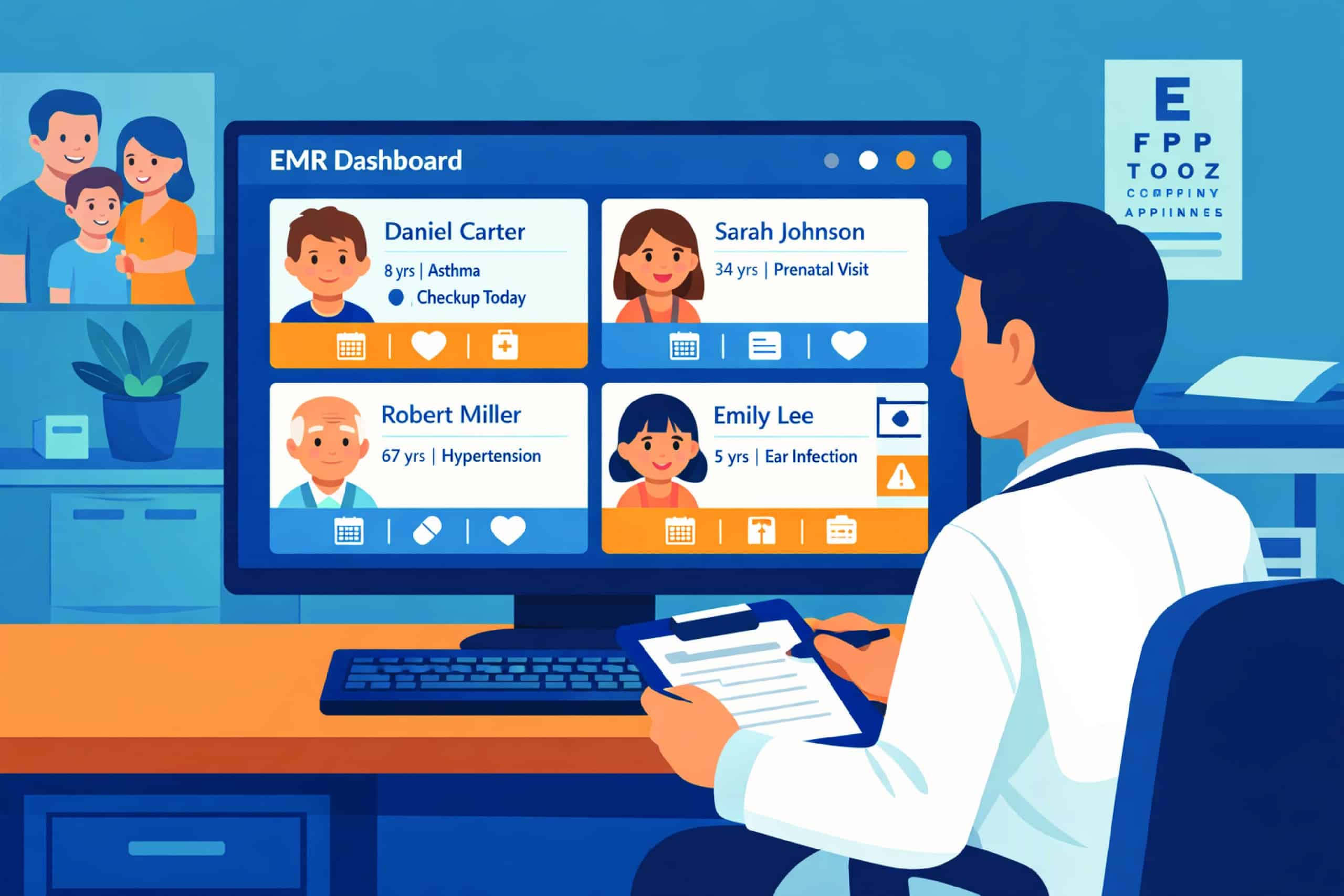
Best EMR for Family Practice: Features, Benefits, and Selection Guide
Family practice clinics serve as the foundation of community healthcare. Unlike many specialties, family medicine providers care for patients across all age groups—from newborns to seniors—while managing everything from routine checkups and preventive care to chronic disease management and acute illnesses.
With such a broad scope of services and high patient volumes, efficiency is critical. Yet many family practice clinics struggle with Electronic Medical Record (EMR) systems that slow documentation, complicate workflows, and create an administrative burden.
This raises an important question:
What is the best EMR for family practice, and what features truly support the unique needs of family medicine?
The right EMR should streamline documentation across age groups, improve preventive care tracking, enhance patient engagement, and support accurate billing and revenue growth. In this guide, we’ll explore the key features, workflow benefits, and selection criteria for choosing the best EMR for family practice clinics.
Understanding the Unique Needs of Family Practice Clinics
Family medicine is one of the most comprehensive fields in healthcare, and its EMR requirements reflect that complexity.
Care Across All Age Groups
Family practice providers manage:
- Pediatric visits and growth tracking
- Adult preventive and chronic care
- Geriatric assessments and medication management
The EMR must support age-specific workflows, including developmental screenings, immunization schedules, and geriatric risk assessments.
Broad Scope of Services
Family practice includes:
- Acute illness treatment
- Chronic disease management (diabetes, hypertension, asthma, etc.)
- Preventive screenings and wellness exams
- Minor procedures
Generic EMRs often lack the flexibility needed to handle this wide range efficiently.
Long-Term Patient Relationships
Family medicine focuses on continuity of care. The ability to track family history, long-term trends, and multi-year health data is essential for effective decision-making.
Key Features of the Best EMR for Family Practice
To support comprehensive care, family medicine clinics should prioritize the following capabilities.
Family Medicine-Specific Documentation Templates
The best EMR for family practice includes structured templates for:
- Well-child visits
- Annual physicals
- Chronic disease management
- Preventive care documentation
Smart templates, auto-fill options, and voice dictation help reduce charting time and improve consistency.
Immunization Management and Tracking
Vaccination management is a critical component of family medicine. A strong EMR should offer:
- Age-based vaccine schedules
- Alerts for due or overdue immunizations
- Integration with state immunization registries
This helps ensure compliance and improves population health outcomes.
Preventive Care and Screening Alerts
Family practice focuses heavily on prevention. Automated reminders should track:
- Cancer screenings
- Routine lab work
- Annual wellness visits
- Health maintenance activities
These alerts help providers close care gaps and improve quality metrics.
Workflow Efficiency Benefits for Family Medicine Clinics
One of the biggest advantages of a well-designed EMR is improved productivity.
Faster Documentation
Structured templates and automation reduce the time required to complete notes. Providers can document during the visit rather than after hours.
Automated Administrative Tasks
Modern EMRs streamline operations through:
- Online patient registration and intake
- Automated appointment reminders
- Insurance eligibility verification
- Electronic forms and signatures
This reduces front-desk workload and improves accuracy.
Increased Patient Throughput
When documentation and administrative tasks take less time, providers can see more patients per day without increasing hours—improving both efficiency and revenue.
Chronic Care Management and Population Health
Family practice clinics manage a large number of patients with ongoing health conditions.
Managing Multiple Chronic Conditions
An effective EMR should support care plans and monitoring for conditions such as:
- Diabetes
- Hypertension
- COPD
- Obesity
Patient Registries and Risk Stratification
Population health tools allow clinics to identify high-risk patients and prioritize outreach and follow-up.
Quality Reporting Support
Integrated reporting helps practices succeed in:
- MIPS programs
- Value-based care models
- Quality improvement initiatives
These capabilities improve patient outcomes while supporting financial incentives.
Family Practice EMR and Revenue Optimization
The right EMR doesn’t just improve clinical care—it strengthens financial performance.
Accurate E/M Coding Support
Structured documentation ensures that evaluation and management (E/M) levels accurately reflect the complexity of care, reducing undercoding.
Preventive and Care Management Billing
A strong system should support billing for:
- Annual Wellness Visits (AWV)
- Chronic Care Management (CCM)
- Transitional Care Management (TCM)
- Preventive services
Automated Charge Capture and Denial Reduction
When clinical documentation flows directly into billing, errors decrease and reimbursement cycles become faster.
Practices that align their EMR with optimized revenue workflows often see the best results. Integrated clinical and billing support from 1st Providers Choice helps family practice clinics improve coding accuracy, reduce denials, and maximize collections while maintaining compliance.
Integration Requirements for Family Practice EMR
Family medicine practices rely on multiple data sources, making integration essential.
Lab and Imaging Integration
Electronic ordering and automatic result import eliminate manual tracking and ensure timely clinical decisions.
Referral and Specialist Communication
Interoperability allows providers to share information quickly and coordinate care across specialists and hospitals.
Patient Portal Features
A robust patient portal should include:
- Appointment scheduling
- Secure messaging
- Access to test results
- Online bill payment
Telehealth Capabilities
Virtual visits are ideal for follow-ups, medication management, and minor acute conditions, improving convenience for patients and efficiency for providers.
Improving Patient Engagement and Experience
Patient engagement plays a major role in long-term health outcomes.
Secure Communication
Patients can ask questions, request refills, and receive care instructions without calling the office.
Online Scheduling and Self-Service
Convenience improves satisfaction and reduces administrative workload.
Family Account Access
Parent or guardian access for pediatric patients allows families to manage care more effectively.
Better Retention and Satisfaction
When care is accessible and communication is easy, patients are more likely to remain with the practice and recommend it to others.
Cloud-Based vs On-Premise EMR for Family Practice
Most family practice clinics benefit from cloud-based solutions.
Advantages of Cloud-Based Systems
- Access from multiple locations
- Lower upfront IT costs
- Automatic updates and security patches
- Scalability for growing practices
When On-Premise May Be Considered
Large organizations with dedicated IT teams or strict infrastructure requirements may prefer on-premise systems, but cloud-based EMRs are typically more practical for independent clinics.
Common EMR Challenges in Family Practice (And How to Avoid Them)
Choosing a System Without Age-Specific Workflows
Family medicine requires pediatric, adult, and geriatric functionality.
Poor Preventive Care Tracking
Without automated reminders, care gaps increase.
Lack of Training and Workflow Optimization
Even the best system fails without proper implementation and staff training.
Disconnected Clinical and Billing Systems
Fragmented workflows lead to errors, delays, and lost revenue.
Working with experienced healthcare technology and revenue partners—such as 1st Providers Choice—can help practices evaluate workflows and implement systems that support both clinical efficiency and financial performance.
Key Metrics to Evaluate EMR Performance
To measure success, family practice clinics should monitor:
- Documentation time per visit
- Patients seen per provider per day
- Preventive care compliance rates
- Immunization completion rates
- Claim denial rates
- Patient portal adoption
- Patient satisfaction scores
Improvement in these metrics indicates strong workflow efficiency and operational performance.
EMR Selection Checklist for Family Practice Clinics
When evaluating options, ask:
- Does the EMR include age-specific templates?
- Does it support immunization and preventive care tracking?
- Can it manage chronic care and population health?
- Does it integrate with labs, referrals, and telehealth?
- Are patient portal features included?
- Does the vendor provide strong training and support?
- Is the system scalable for future growth?
A structured selection process helps ensure long-term success.
Conclusion: The Right EMR Supports Comprehensive Family Care
Family medicine requires flexibility, continuity, and efficiency. The best EMR for family practice should deliver:
- Fast, accurate documentation across age groups
- Strong preventive and chronic care management
- Improved patient engagement and satisfaction
- Accurate coding and optimized revenue
- Scalable technology to support long-term growth
Ultimately, the right EMR is not just a clinical tool—it’s a strategic investment in better care and stronger practice performance.
If your current system is slowing your team down or limiting growth, it may be time to evaluate your workflows and revenue processes. End-to-end clinical and revenue optimization solutions from 1st Providers Choice help family practice clinics streamline operations, improve compliance, and increase financial performance.
The real question isn’t whether your clinic has an EMR—it’s whether your EMR is truly designed to support the comprehensive, lifelong care that defines family medicine.
Frequently Asked Questions (FAQs)
What features should the best EMR for family practice include?
The best EMR for family practice should offer age-specific documentation templates, immunization tracking, preventive care alerts, chronic disease management tools, lab and referral integration, patient portal access, telehealth capabilities, and built-in coding support to improve workflow efficiency and revenue accuracy.
How does an EMR help manage preventive care in family medicine?
An EMR improves preventive care by providing automated reminders for screenings, vaccinations, annual wellness visits, and routine labs. It also generates patient registries and population health reports to help identify care gaps and improve quality measures.
Can a family practice EMR support care for both pediatric and adult patients?
Yes. A family medicine-specific EMR includes age-based workflows such as growth charts and developmental screenings for children, preventive care tracking for adults, and medication and risk management tools for older patients, allowing providers to manage all age groups efficiently.
How does the right EMR improve revenue for family practice clinics?
The right EMR supports accurate E/M documentation, enables billing for preventive and care management services (such as AWV, CCM, and TCM), automates charge capture, and reduces claim denials through better documentation and coding accuracy.
Is a cloud-based EMR a good choice for family practice clinics?
For most family practice clinics, cloud-based EMRs are ideal because they offer secure remote access, lower upfront IT costs, automatic updates, scalability for growing practices, and easy integration with patient portals, telehealth, labs, and billing systems.